Nudibranchs, and where to find them
The animal everybody is looking for. What they are, why they are so hard to see, and where you can find them.
What they are
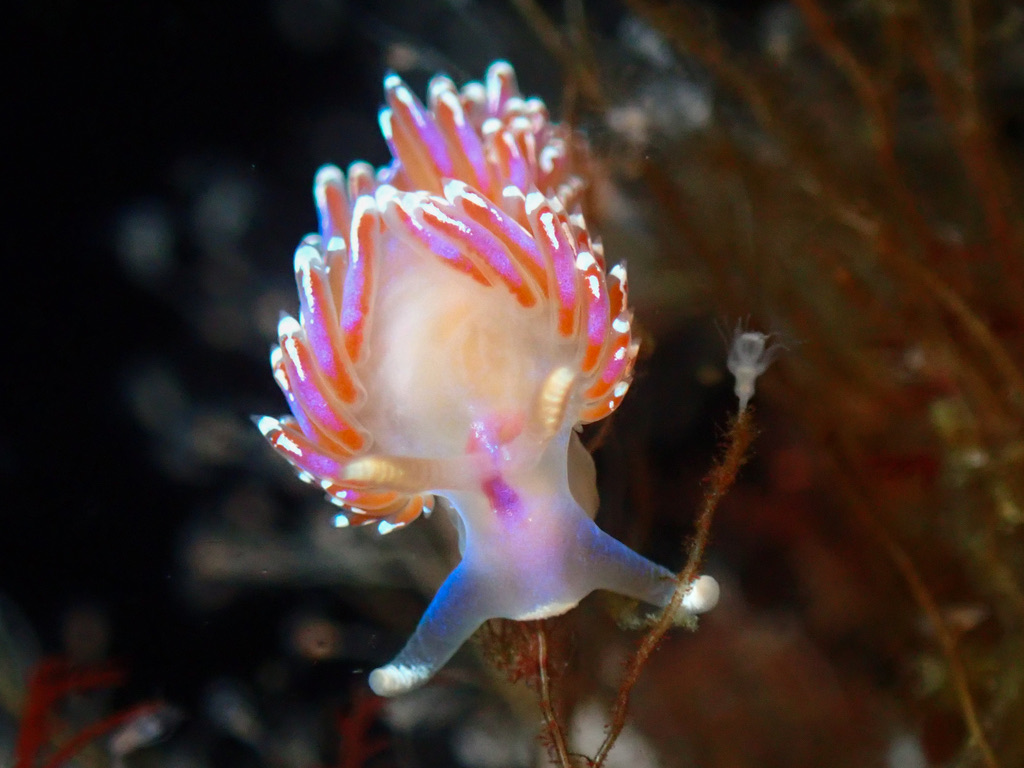
A nudibranch is a sea snail that gave up its shell. The name means "naked gill", and the tuft or the row of frills on its back is exactly that: the gill, outside the body, because there is no longer a shell to hide it in.
About three thousand species are described. Most are between one and four centimeters long. They are, more or less as a group, spectacular: scarlet, electric blue, orange, translucent white with pink tips, patterned in ways that make no sense until you learn that many of them are advertising being poisonous.
Not everything called a sea slug is a nudibranch. Sea hares are much bigger, much commoner and belong to a different order. Sacoglossans are a third group, the sap-sucking ones, some of which keep working chloroplasts stolen from the algae they eat and photosynthesize for weeks. All are worth finding. Only the first are nudibranchs.
Where they are recorded
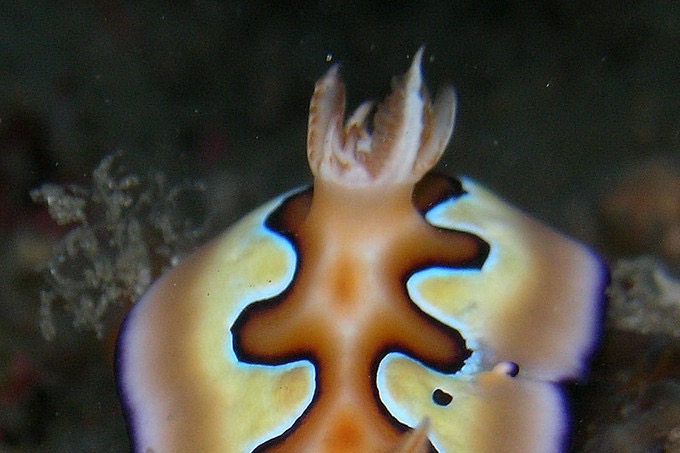
Nudibranchs turn up on every coast the directory covers, and sea slugs more widely still, because sea hares and sacoglossans are bigger and easier to find than most nudibranchs are.
Why you are not seeing any
Because you are looking at the wrong scale, in the wrong place, and probably at the wrong height on the shore.
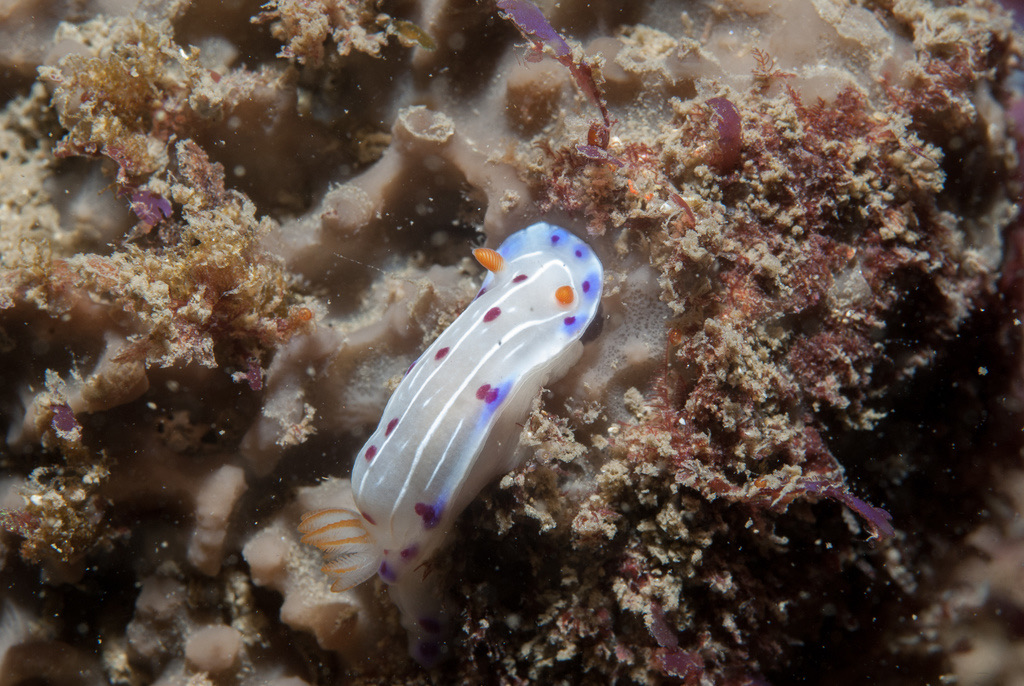
Scale first. A big one is the length of a thumb joint. Most are smaller, and the search image most people carry, a bright animal moving across open rock, is wrong; they are nearly always still, and nearly always against something the same color.
Then the height. Nudibranchs are a low-shore animal. They are uncovered only on the bigger tides, which is why they are the best argument for checking a tide chart before you go rather than turning up on an average afternoon.
How to actually find one
Find their food first. Almost every nudibranch is a specialist predator on one sessile thing: a particular sponge, hydroid, bryozoan or anemone. Where it lives is wherever that thing grows. Learn to spot the furry-looking hydroid turf and the flat crusts of sponge on a shaded overhang, and you have narrowed the search from a whole shore to a few square meters.
Then look under and sideways rather than down. Shaded vertical rock, the undersides of overhangs, the walls of a deep rock pool below the algae line. Get your eyes to within thirty centimeters of the surface and stay there for a minute. The standing-up survey that works for anemones finds nothing here.
Look for the egg masses too, which are much easier to spot than the animal: coiled white or pale-pink ribbons stuck to rock or weed, like a tiny rose laid flat. An egg ribbon means an adult is within a few centimeters of it.
When
Seasonality is local and strong. Many species are annual: they appear in numbers for a few weeks to breed and are essentially absent the rest of the year, so a shore that has nothing in August can have a lot in April.
The genera recorded most widely across this directory are Doris, Hermissenda and Diaulula. If all else fails: go on the lowest tide of the month, and go in spring.