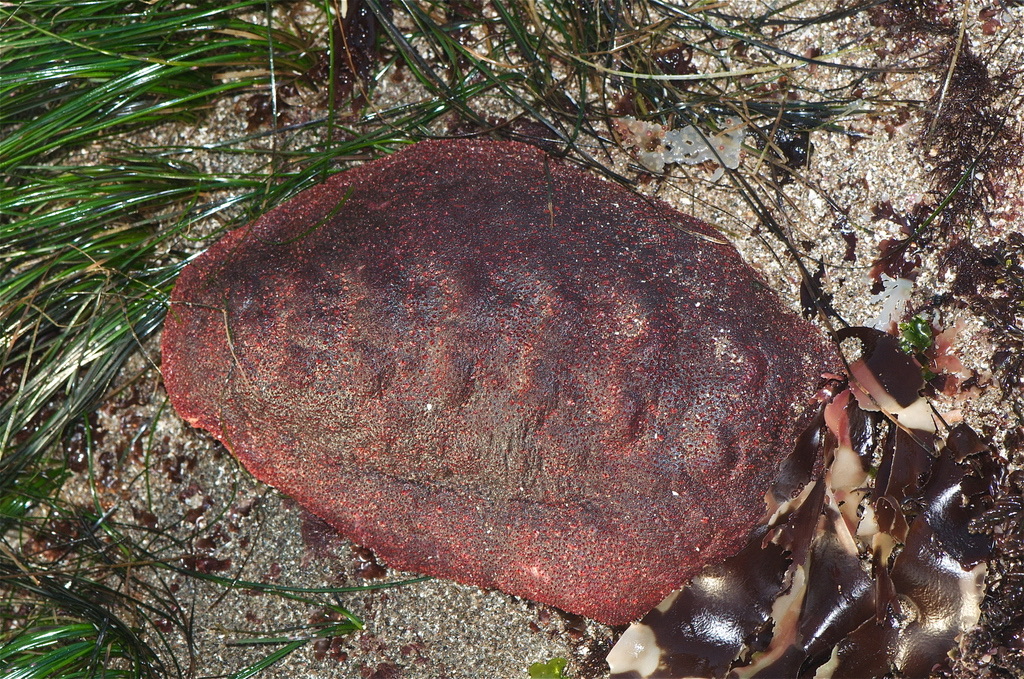
What lives in a rock pool
The groups you will meet first, from crabs to anemones to mussels.
Sea snails, the most commonly seen
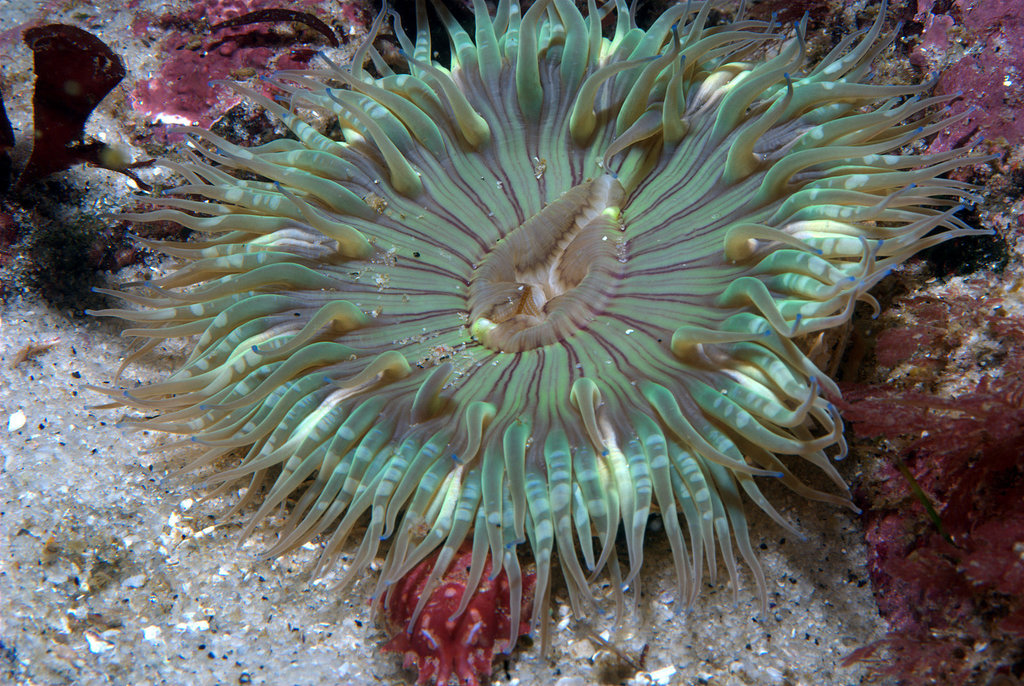
Sea snails are the most photographed group on this site by a distance. The label is also the least useful one on it, because it covers four things that behave nothing alike.
Limpets are the flat cones clamped to bare rock; each one grinds a scar it returns to and sits in. Periwinkles are the small dark spirals in cracks high up the shore, often well above the waterline. Whelks and dog whelks are the chunkier spirals lower down, and they are predators: the neat round hole drilled through a mussel shell was made by one. Top shells and turbans are the glossy conical ones, often with a pearly layer showing through where the outer shell has worn.
Crabs, and the crab that is not a crab
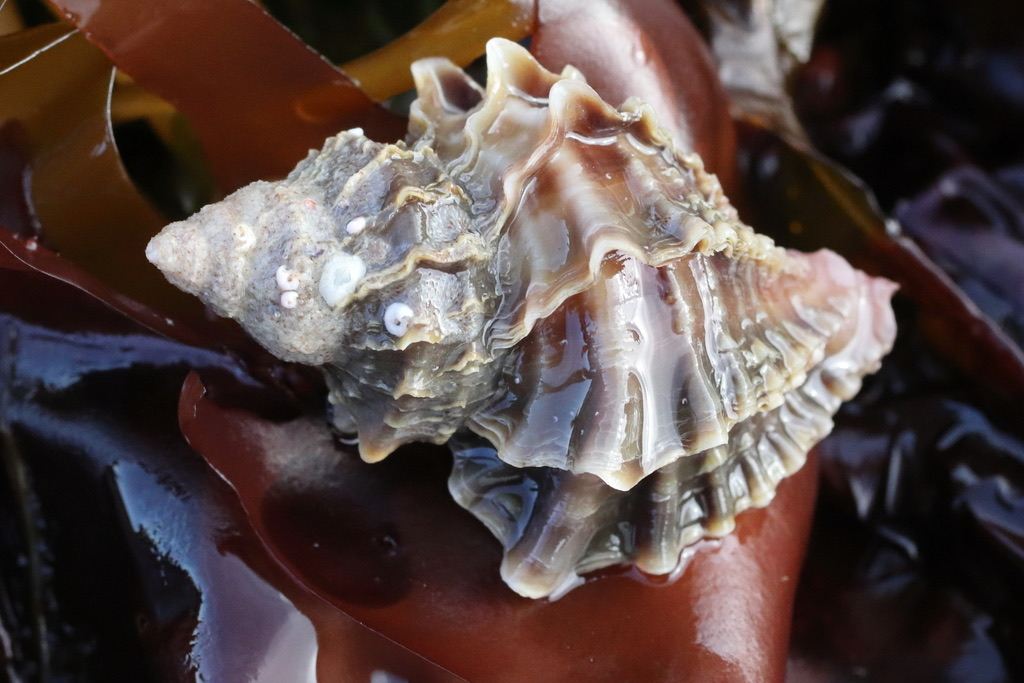
Crustaceans come next, and on most shores that means crabs. Shore crabs are the ones that scuttle sideways under a lifted rock, and the correct response is to put the rock back rather than to follow them.
A hermit crab is the interesting one. It is not a true crab, its abdomen is soft and spiralled to fit a snail shell it did not build, and it has to find a larger empty shell as it grows. Hermit crabs queue for them: when a good empty shell appears, a line of them forms by size and they swap in sequence. This is also the reason not to pocket empty shells from a shore where hermits live. An empty shell there is housing stock, and taking it is a housing shortage!
Anemones, which are in fact animals and are hunting
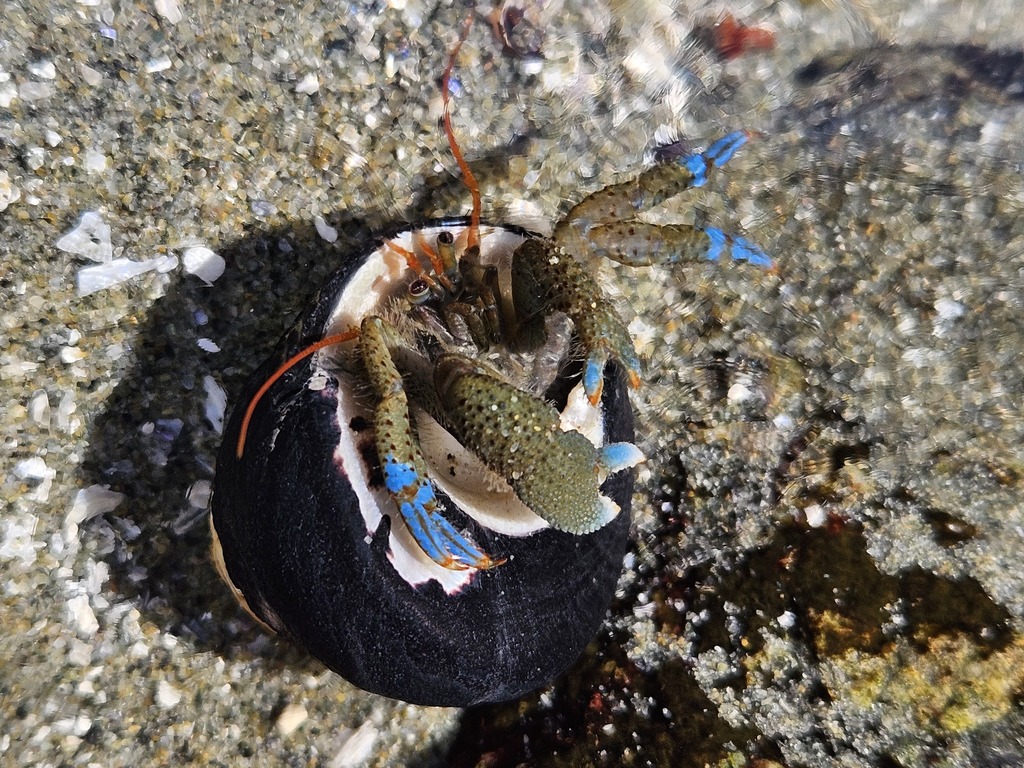
Out of water an anemone looks like a blob of dark jelly stuck to the rock, see the photo at the top of this article. Submerged, it opens into the ring of tentacles most people picture.
Those tentacles are covered in stinging cells that fire on contact. They cannot hurt a human finger through the skin, which is why an anemone feels merely sticky if you touch one, and why you should not. The cells are single-use and what you are feeling is the animal trying to eat you! Some species clone themselves into large single-color patches, and neighboring clone groups fight along a visible boundary line.
Sea stars, urchins and their relatives
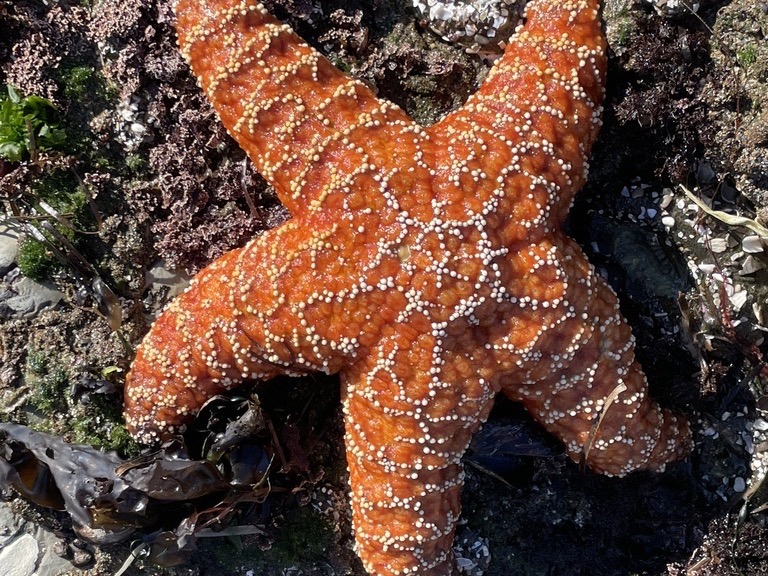
Sea stars, urchins, sea cucumbers and brittle stars are all echinoderms: five-fold symmetry, no head, and a hydraulic system of tube feet instead of muscles for moving and gripping.
A sea star feeds by pushing its stomach out through its mouth and digesting a mussel inside its own shell. An urchin grazes with five self-sharpening teeth and, in some places, grinds a hollow in the rock and lives in it permanently. A brittle star sheds arms deliberately when grabbed, which is what the name is about, so leave them where they are.
Pacific sea stars are also the shore’s most visible recent catastrophe: sea star wasting disease killed them at an enormous scale from 2013 onward, and recovery along the coast has been real but patchy.
Mussels, chitons and the octopus you probably will not see
A mussel bed is a habitat rather than a collection of animals: hundreds of other species live in the gaps, and the threads holding it down are an adhesive that cures underwater in breaking surf, which materials scientists have spent decades trying to copy. A chiton is the oval one with eight overlapping plates down its back, which will roll into a ball if you dislodge it, so do not. And an octopus in a rock pool is a genuine event. Mostly you find the tidy pile of empty crab shells outside a den rather than the animal, which is worth more than seeing one anyway.