The rockpooling code
Look and photograph, take nothing. Plus the four specific habits that separate a visit a shore recovers from in an hour from one it does not.
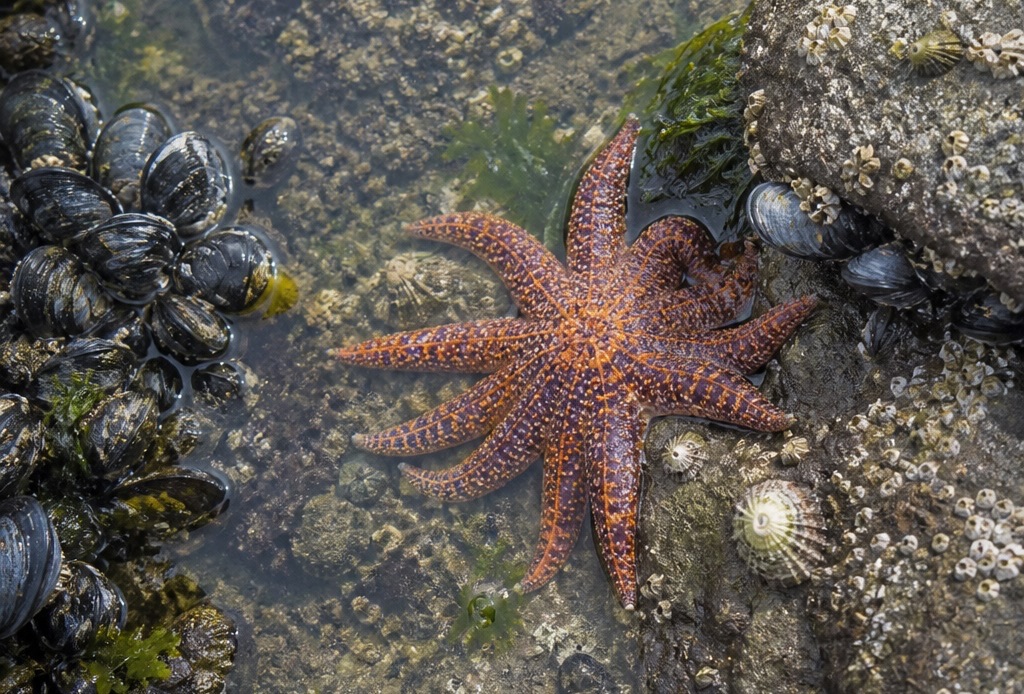
Look and photograph, take nothing
A rock pool is a small closed system that floods and drains twice a day, and everything in it is where it is for a reason. The rule is one line long and it covers most of what follows: look, photograph, and put nothing in a bucket or a pocket.
This is not sentiment about a shell. A shore that is visited by a few hundred people a year absorbs a certain amount of collecting; the same shore visited by fifty thousand does not, and the popular ones now are visited by fifty thousand. The photograph is the souvenir.
Put the rock back the way you found it
Turning a rock over is the single most productive thing you can do on a shore, and the single most destructive if you do it carelessly.
The underside of a rock is a habitat: a dark, damp, sheltered surface that a whole community is attached to and that took years to establish. Left upside down, everything on it dries out or is eaten within a tide. So: lift the rock towards you rather than flipping it, look, and set it back down the same way up, in the same hollow, gently enough not to crush what is underneath. If it is big enough that you cannot put it back carefully, it is too big to lift.
Do not pull anything off
Limpets, chitons, anemones, sea stars and urchins are all attached, and all of them can be pulled free by an adult with mild effort. None of them survives it reliably.
Many limpets grind a scar into the rock that fits their own shell exactly and return to that exact spot; pried off, one usually cannot reattach and dies. An anemone tears. A sea star pulled off a rock leaves tube feet behind. The general rule is that if something resists, it is not resisting decoratively. That grip is the animal’s entire strategy for not being washed away, and breaking it is not a neutral act.
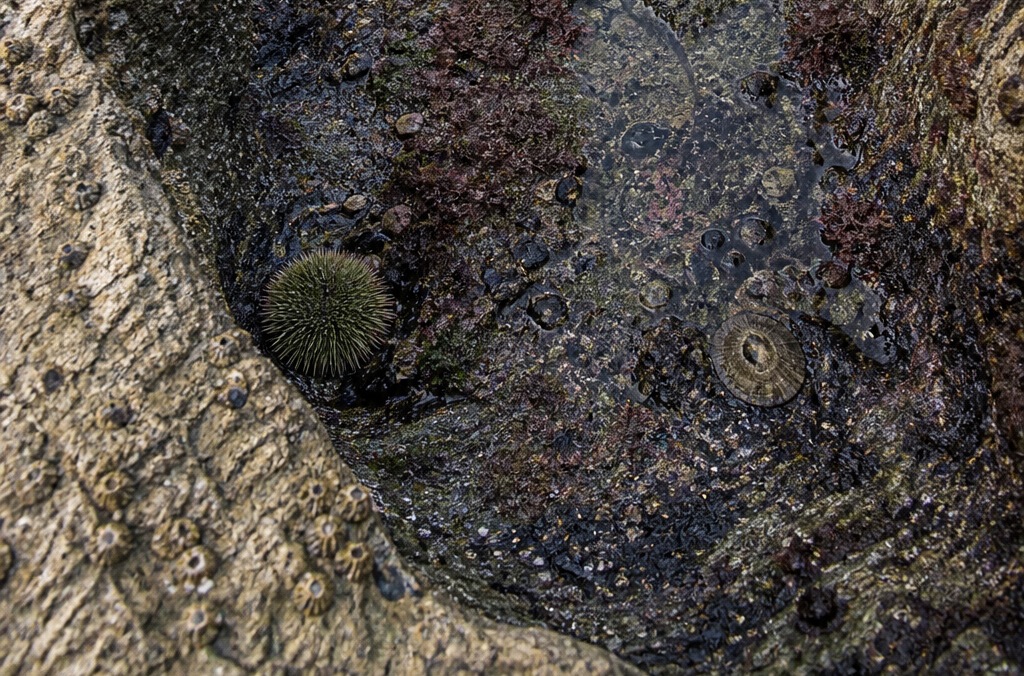
Watch where you put your feet
The thing most people damage on a shore is not the animal they picked up. It is the mussel bed they walked across to get to it.
Mussels, barnacles and turf algae are animals and plants, not ground. Walk on bare rock and sand where there is any, keep to the same routes other people have already used, and step over rather than into anything living.
The law is stricter than most people expect
Collecting rules vary enormously and are easy to break by accident. Many shores sit inside marine protected areas where taking anything at all, including empty shells, rocks and dead material, is prohibited. California alone has more than a hundred such areas along its coast; Britain has statutory sites; Australia and New Zealand both have marine reserves with no-take rules and real penalties.
Some places additionally require a fishing license to disturb anything, whether or not you keep it. This site notes protected status on a rock pool page where the data records it, but that is a note and not a legal opinion: check the signage at the access point and the managing agency’s own rules before you touch anything. The safe default, everywhere, is the one at the top of this page: look and photograph, take nothing.
Why it matters more than it did
Intertidal animals are living at the top of their thermal range already. They are adapted to being exposed to air, sun and rain twice a day, and that adaptation has very little headroom left in it. A marine heatwave can cook a mussel bed in place over a single afternoon low tide, and several have.
An animal that is already at its limit does not have much left over for being detached, warmed in a hand and set down somewhere it did not choose. Leaving it alone is not fussiness; it is a valuable contribution.